
The easiest purchase to regret is often the one that required almost no effort to make. Cornell researchers found that customers who adopted one-click checkout increased spending by an average of 28.5% over prior levels. Cornell’s one-click checkout research That helps explain why learning how to stop overspending is not simply a matter of becoming “more disciplined.” Modern shopping is designed to remove pauses.
A better strategy is to understand what triggers spending, make your money visible, and deliberately add friction before nonessential purchases. That protects your budget without turning every coffee, dinner, or hobby into a source of guilt.
Overspending Is a Pattern, Not a Personality Flaw
Overspending means your spending repeatedly exceeds what you can sustainably afford or what you intended to spend. The cause may be underestimating groceries, irregular bills, or subscriptions. It can also involve impulse shopping, stress, boredom, social pressure, or easy credit.
If rent, insurance, food, childcare, and transportation already consume nearly all of your take-home pay, cutting “fun spending” may not solve the problem. You may have an income or fixed-cost problem rather than a self-control problem.
The Federal Reserve’s latest household research provides important context. In 2025, 59% of US adults reported at least one major unexpected expense during the prior 12 months, while 63% said they could cover a $400 emergency using cash or its equivalent. Federal Reserve household financial well-being report. Financial strain and overspending are not always the same thing.
Find the Trigger Before You Cut the Purchase

Start with the moment before an unplanned transaction. Were you stressed, bored, lonely, celebrating, scrolling social media, or reacting to a “limited-time” offer?
The American Psychological Association notes that repeated decisions can deplete self-control and recommends strategies including tracking spending, automating savings to build wealth, and reducing exposure to tempting shopping environments.
Utah State University Extension suggests another useful question: are you buying something you need, or trying to change how you feel? That distinction can expose emotional spending before it becomes another credit-card charge.
For one week, label each unplanned purchase with its trigger: convenience, mood, social influence, sale urgency, boredom, or genuine need. The purpose is observation, not shame.
Use a 72-Hour Rule for Nonessential Spending
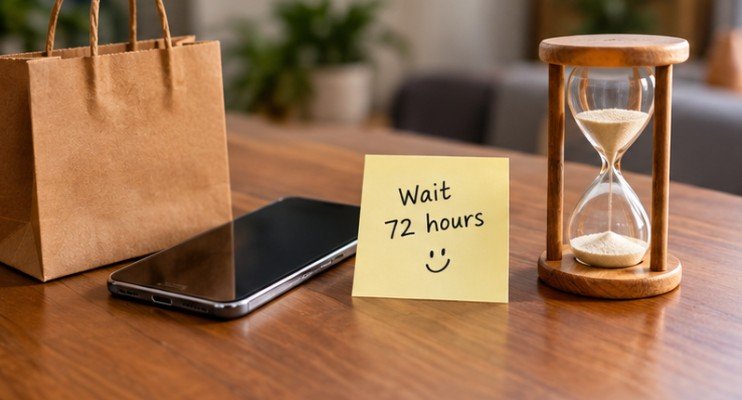
For nonessential purchases, add the product to a list and wait 72 hours before buying it.
Desire is often strongest at discovery. Three days later, a “must-have” item may look ordinary. If you still want it, can pay for it without creating debt, and it fits your spending plan, the waiting period has improved the decision rather than blocked it.
A 24-hour delay may work for smaller purchases. For expensive electronics, furniture, travel, or luxury goods, consider waiting a week. The exact period matters less than creating a deliberate pause between wanting and paying.
Make Spending Harder and Saving Easier
Cornell’s one-click findings show why shopping friction matters. If eliminating checkout steps encourages spending, putting a few steps back can work in your favor.
Delete stored card numbers from retail websites. Remove shopping apps you open automatically. Unsubscribe from promotional messages, mute social accounts that constantly push products, and turn off retail notifications.
Then make the opposite behavior easier. Transfer savings automatically after payday, ideally into a separate savings account. Investor.gov recommends automatic contributions because automation reduces the need to repeatedly decide whether to save or spend.
Buy-now-pay-later services also deserve caution. The APA reported in 2026 that installment systems can bypass some of the psychological and practical barriers that normally slow impulse buying. A $240 purchase may be advertised as “four payments of $60,” but your budget still carries a $240 obligation.
Try the Weekly Spending Reset
Monthly budgets can fail because the feedback arrives too late. CFPB research found that consumers often want to follow budgets but struggle to use those plans during real-time purchasing decisions.
A 10-minute weekly spending reset creates faster feedback.
| Weekly check | Question | If you are off track |
| Transactions | What did I actually spend? | Flag surprises and subscriptions |
| Triggers | Which purchases were unplanned? | Note the situation or emotion |
| Remaining cash | What is safe before payday? | Set a weekly cap |
| Upcoming costs | What bill is next? | Reserve that money now |
| Adjustment | What changes this week? | Add one spending barrier |
CFPB researchers also found strong consumer interest in tools showing how much budget remains at the moment of purchase. The lesson is simple: seeing the consequence before checkout can be more useful than discovering it three weeks later.
Build a Spending Plan That Includes Enjoyment
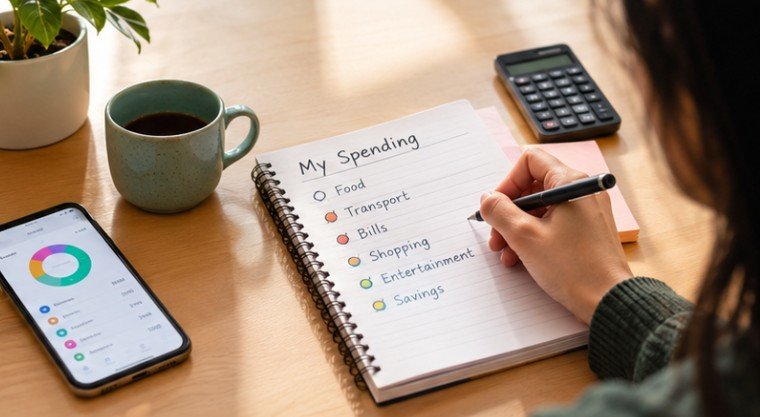
An unrealistic budget can create a restriction-and-rebound cycle. Instead, separate money into obligations, future goals, and flexible enjoyment.
After housing, utilities, minimum debt payments, food, transportation, insurance, and planned savings are covered, decide what can be spent freely. Someone who loves restaurants may keep that category while cutting elsewhere. Someone saving for travel may deliberately maintain a smaller clothing budget.
Consumer.gov recommends writing down income and expenses and checking whether expenses exceed income. If the result remains negative after realistic cuts, another budgeting trick may not be enough. The answer may require reducing major fixed costs, increasing income, restructuring debt, or seeking qualified financial counseling.
When Overspending May Need More Than a Budget
Occasional impulse buying is common. Compulsive buying is different.
Research reviews describe compulsive buying-shopping disorder as persistent or poorly controlled shopping and spending that causes significant distress or interferes with normal functioning. Warning signs can include hiding purchases, repeatedly using money needed for essentials, adding debt despite attempts to stop, or experiencing relationship and work problems because of shopping.
A 2023 systematic review examining 13 treatment studies found that psychotherapy research, particularly group cognitive behavioral therapy, showed promising results, although researchers cautioned that the evidence base remains limited and study quality varies.
If spending feels uncontrollable or is closely connected with significant anxiety, depression, or other mental-health concerns, professional help may be more appropriate than another budgeting app.
Frequently Asked Questions
1. What is the $27.40 rule?
The $27.40 rule is an informal savings challenge. Saving $27.40 daily for 365 days produces about $10,001. It is simple math, not an official financial guideline, and may be unrealistic for some incomes.
2. What is overspending a symptom of?
Overspending can reflect poor planning, emotional coping, impulse buying, social pressure, easy credit, or financial stress. Persistent uncontrollable shopping that causes harm may warrant evaluation by a qualified mental-health professional.
3. Why do I overspend so much?
Common reasons include unclear limits, convenience, stress, boredom, sales pressure, social-media influence, stored payment details, and delayed awareness of total spending. Tracking triggers before unplanned purchases can reveal your pattern.
4. Can you live off $1,000 a month after bills?
Possibly, if major fixed bills are already paid. Whether $1,000 is enough depends on food, transportation, healthcare, debt, location, dependents, and savings needs. Divide it among remaining essentials before treating any portion as discretionary.
Make the Pause Your Advantage
Learning how to stop overspending means closing the gap between what you intend to do with money and what actually happens at checkout. Start with one week of observation, one 72-hour waiting rule, and one weekly review. Then remove the shortcuts that make unwanted spending effortless.
You do not need a budget that makes life smaller. You need a system that protects money for what matters most. The purchase you skip is not always the victory; the real win is reaching the end of the month and recognizing that your spending matched your priorities.