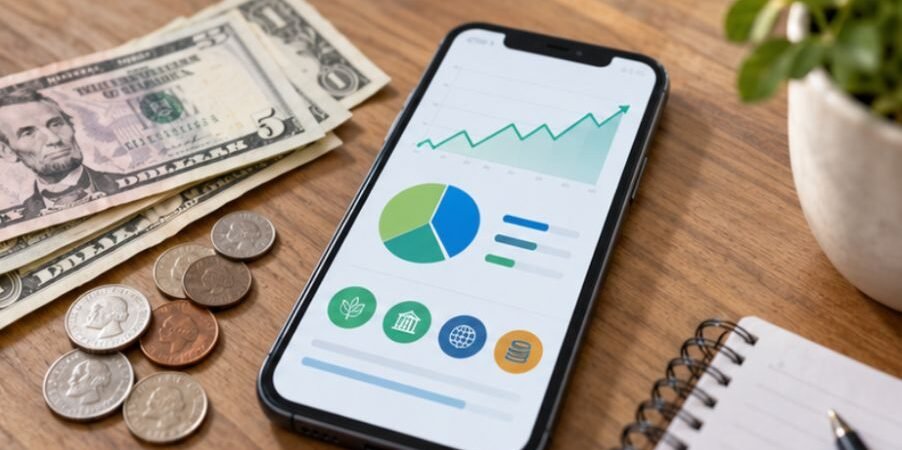
You do not need $10,000, $1,000, or even a full share of stock to become an investor. Many U.S. brokerage firms support fractional shares, so a small deposit can buy part of a stock or ETF. FINRA says fractional shares can make higher-priced securities accessible to investors with smaller accounts.
Learning how to start investing with little money is less about finding a magic minimum and more about building a system that protects your cash needs, keeps costs low, and gets small amounts invested consistently.
First, Decide Whether This Money Should Be Invested
Investing is useful for long-term goals, but markets also fall. Money for next month’s rent, a car repair, or an unexpected medical bill has a different job.
The Consumer Financial Protection Bureau recommends keeping emergency savings available for unplanned expenses. Without a cash cushion, a financial shock can push people toward credit cards, loans, or withdrawals from other savings.
Before investing, a clear 50/30/20 budget rule can help you decide how much income should go toward needs, wants, and financial goals.
A practical rule is simple: do not invest money you may need soon. If you have no emergency reserve, start building one. If you carry expensive credit card debt, reducing it may deserve priority before increasing taxable investments.
Investor.gov also stresses time horizon. Short-term goals generally call for less risk, while investors with years or decades before they need the money can usually tolerate more volatility.
How to Start Investing With Little Money: Use the Small-Amount Ladder
The easiest path is to make a few small decisions in the right order.
Step 1: Pick the Account Before the Investment
If your employer offers a 401(k), check for a match. The Labor Department notes that some employers contribute by matching part of what employees put in.
For 2026, the IRS says employees can defer up to $24,500 into most 401(k) plans, while the IRA limit is $7,500. Beginners do not need to approach those ceilings.
A Roth or traditional IRA may suit retirement savings. A taxable brokerage account offers more withdrawal flexibility but fewer retirement-specific tax advantages.
Step 2: Choose a Brokerage Built for Small Deposits

Look for no required account minimum, fractional-share support, recurring investments, clear fee disclosures, and access to low-cost diversified funds.
If an ETF costs $250 per share, a brokerage that allows dollar-based purchases may let you invest $10 or $25 instead. Policies vary, however. FINRA notes that some brokers restrict eligible securities, and fractional positions may not transfer directly to another brokerage.
Step 3: Start Diversified Instead of Chasing One Winner
One diversified mutual fund or ETF may provide exposure to hundreds of securities.
Index funds aim to track a market index rather than depend on a manager to pick winners. Investor.gov notes that passive strategies often involve less trading and can have lower costs than many actively managed alternatives.
That does not make an index fund risk-free. Diversification reduces concentration risk; it cannot prevent losses during a broad market decline.
| If you can invest… | A reasonable first move | Main priority |
| $5–$25 at a time | Use fractional shares or a fund accepting small purchases | Build the habit |
| $25–$100 monthly | Automate purchases into a diversified fund | Consistency and low fees |
| $100+ monthly | Keep the same core strategy and raise contributions gradually | Stay diversified |
| Employer match available | Consider contributing enough to capture it if affordable | Use workplace benefits |
Automation Matters More Than Motivation
Small investors often wait for a “better time” to buy. That can become months of sitting in cash while trying to predict the market.
A stronger approach is to schedule a fixed transfer after payday and invest it automatically. FINRA describes dollar-cost averaging as investing roughly the same amount at regular intervals regardless of market fluctuations. It can reduce the temptation to time the market, though it does not protect against losses.
Someone investing only $15 a week is still building a repeatable process. Investor.gov emphasizes regular investing and time because compounding becomes more powerful over longer periods.
Fees Can Matter More Than Beginners Expect

A zero-commission trade does not mean investing is free.
Funds may charge annual operating expenses, while brokerages can impose account, transfer, advisory, or other fees. The SEC warns that even small differences in ongoing costs can create meaningful differences in long-term portfolio values.
Before buying a fund, check its expense ratio. Before opening an account, check the brokerage fee schedule. For a small account, avoiding a recurring fee can matter more than obsessing over short-term performance.
Three Mistakes That Make Small Portfolios Harder to Grow
First, do not confuse a low share price with a bargain. A $3 stock is not automatically “cheaper” in value terms than a $300 stock when fractional shares exist.
Second, do not mistake many tiny stock positions for true diversification. A broad fund may spread risk more effectively than a handful of unrelated individual picks.
Third, avoid turning investing into daily entertainment. Contribution rate, costs, diversification, and time horizon usually matter more than today’s price movement.
A Five-Minute Test Before Your First Deposit

Ask: Do I have cash for near-term emergencies? Is this money for a goal years away? Track expenses automatically so you know how much you can realistically invest each month. Does my account avoid unnecessary fees? Am I buying something diversified that I understand? Can I automate the next contribution?
If most answers are yes, you have a workable foundation. Starting small is useful; starting without a plan is not.
Frequently Asked Questions
1. Can I start investing with only $10?
Yes. If your brokerage supports fractional shares or low-dollar fund purchases, $10 may be enough. The more important step is choosing a suitable account and contributing consistently.
2. Should I invest if I have credit card debt?
High-interest debt may deserve priority. Keep necessary emergency savings and consider any valuable employer retirement match before deciding how much to invest elsewhere.
3. Are ETFs good for beginners?
They can be. Broad, low-cost ETFs can simplify diversification, but they still carry market risk. Check the holdings, expense ratio, and whether the fund fits your time horizon.
4. How often should a beginner invest?
Weekly, biweekly, or monthly can all work. Choose a schedule your budget can sustain, automate it, and increase the amount when your cash flow improves.
Start With the System, Not the Number
The biggest advantage of learning how to start investing with little money is realizing that the first deposit needs to be repeatable, not impressive.
A $20 contribution will not transform your finances by itself, but it can prove that your account is open, your investment is chosen, and your automation works. From there, raises, paid-off debts, tax refunds, or lower expenses can increase the amount going in. Keep emergency money separate, favor diversification over excitement, watch fees, and give long-term investments time to work. Starting small works best when small is only the beginning.