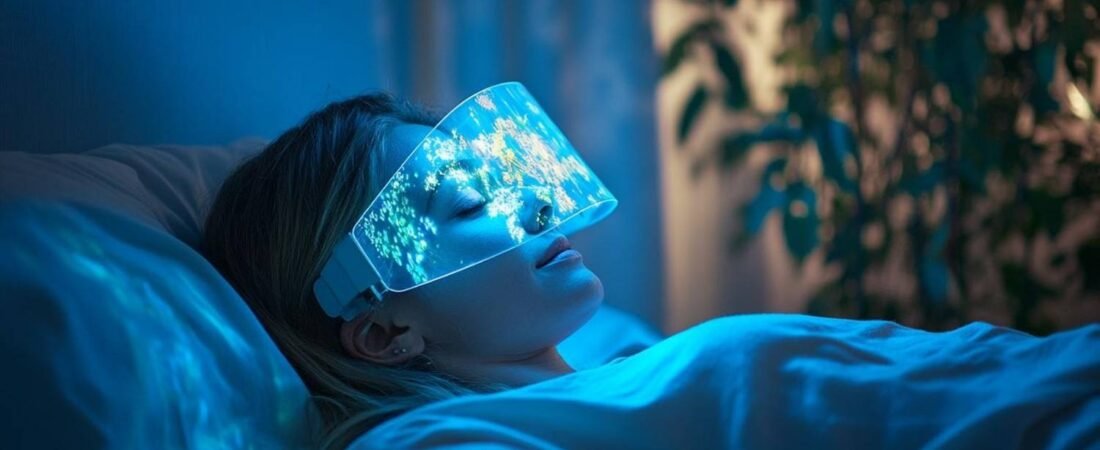
Sleep used to be the one part of the day that technology was supposed to stay out of. Now, the smartest devices are learning when to dim the lights, cool the bed, quiet the room, track recovery, and even help me wake up at a better time.
For many people in the US, that shift makes technology for better sleep habits less about staring at another screen and more about creating a bedroom that quietly works in the background.
I do not believe better sleep comes from collecting more numbers or buying every new gadget. The real value appears when technology removes friction from healthy routines.
A smart ring can reveal patterns, a temperature-controlled bed can reduce nighttime discomfort, a sunrise alarm can make mornings less jarring, and Sleep Focus can keep notifications from following me into bed. Used thoughtfully, sleep technology can turn small nightly choices into a routine that feels easier to maintain.
How Can Sleep Technology Actually Improve My Sleep Routine?
The best sleep technology supports behaviors I already want to build. My phone can switch into Sleep Focus or Bedtime Mode before bed, smart lights can gradually dim, a thermostat can cool the bedroom, and a sunrise alarm can replace a harsh phone alarm in the morning. Many of these devices also work well as technology gifts for everyday use because they solve practical problems without requiring major lifestyle changes.
I prefer choosing technology based on the problem. If late-night scrolling keeps me awake, notification limits and a tech cutoff may matter most. If I repeatedly wake up hot, temperature control becomes more useful. If traffic, neighbors, or a snoring partner interrupt sleep, sound masking may make the biggest difference.
Which Sleep Technology Works Without Wearing a Tracker?
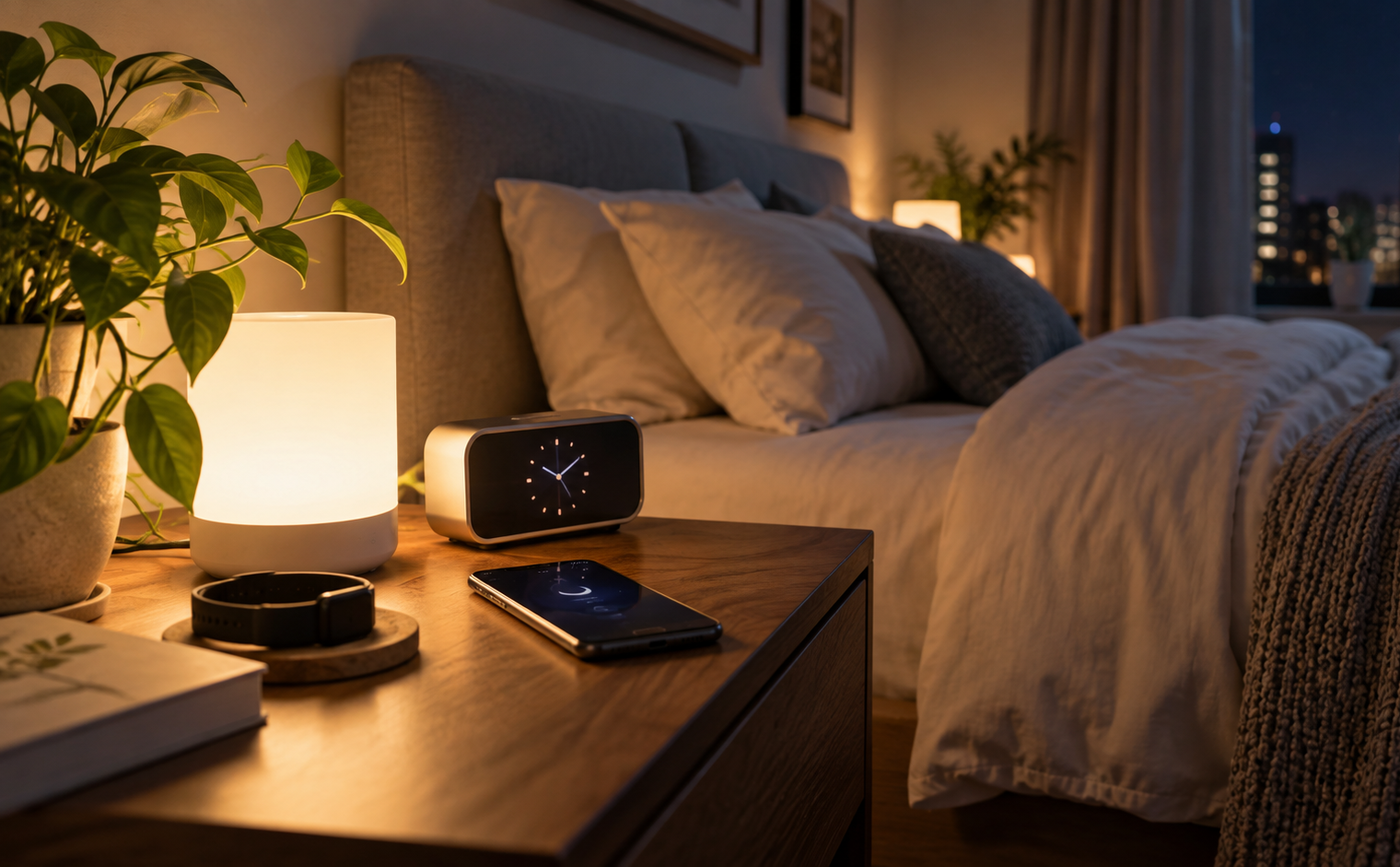
Passive sleep technology is increasingly attractive for people who dislike wearing a smartwatch or ring overnight.
The Eight Sleep Pod 5 fits over an existing mattress and can independently heat or cool each side of the bed. It also tracks sleep-related information such as heart rate and heart rate variability, while its Autopilot system can make temperature adjustments during the night. For couples with very different temperature preferences, that combination can be useful, although the premium price is a significant trade-off.
Under-mattress trackers offer another screen-free option. Withings Sleep Analyzer can monitor sleep, heart rate, snoring, and breathing-related information without requiring a wearable. Wakefit Zense Track8 follows a similar contactless model, tracking sleep stages, movement, snoring, heart rate, and breathing rate, although it is primarily marketed outside the US.
Smart anti-snoring technology is also becoming more sophisticated. Motion Pillow uses AI to detect snoring and gradually inflates internal airbags to reposition the sleeper’s head. I would still treat any anti-snoring pillow as a comfort tool rather than a replacement for professional evaluation when snoring is severe or accompanied by breathing pauses.
Are Smart Rings and Smartwatches Worth Using for Sleep?
Wearables make more sense to me when I want to connect sleep with exercise, recovery, heart rate, stress, or other daytime patterns.
Oura’s current Ring 4 analyzes movement, skin temperature, resting heart rate, HRV, respiratory rate, and estimated sleep stages. RingConn Gen 2 takes a similar screen-free approach and adds breathing and blood-oxygen measurements designed to provide sleep apnea risk insights. These devices can provide useful trends, but consumer wearables should not be treated as replacements for clinical sleep testing.
Smartwatches offer a broader ecosystem. Samsung Galaxy Watch8 includes sleep stages, bedtime guidance, sleep consistency, heart rate information, and FDA-authorized sleep apnea risk detection on supported setups.
Compatible Apple Watch models can monitor breathing disturbances and alert eligible users to possible signs of moderate to severe sleep apnea. Both companies make clear that these features do not replace a medical diagnosis.
This is where technology for better sleep habits becomes especially useful. Instead of worrying about one poor score, I can study patterns across several nights and ask whether my bedtime, caffeine habits, exercise, stress, or evening routine changed.
Can Sunrise Alarms and Smart Lights Improve My Sleep Schedule?
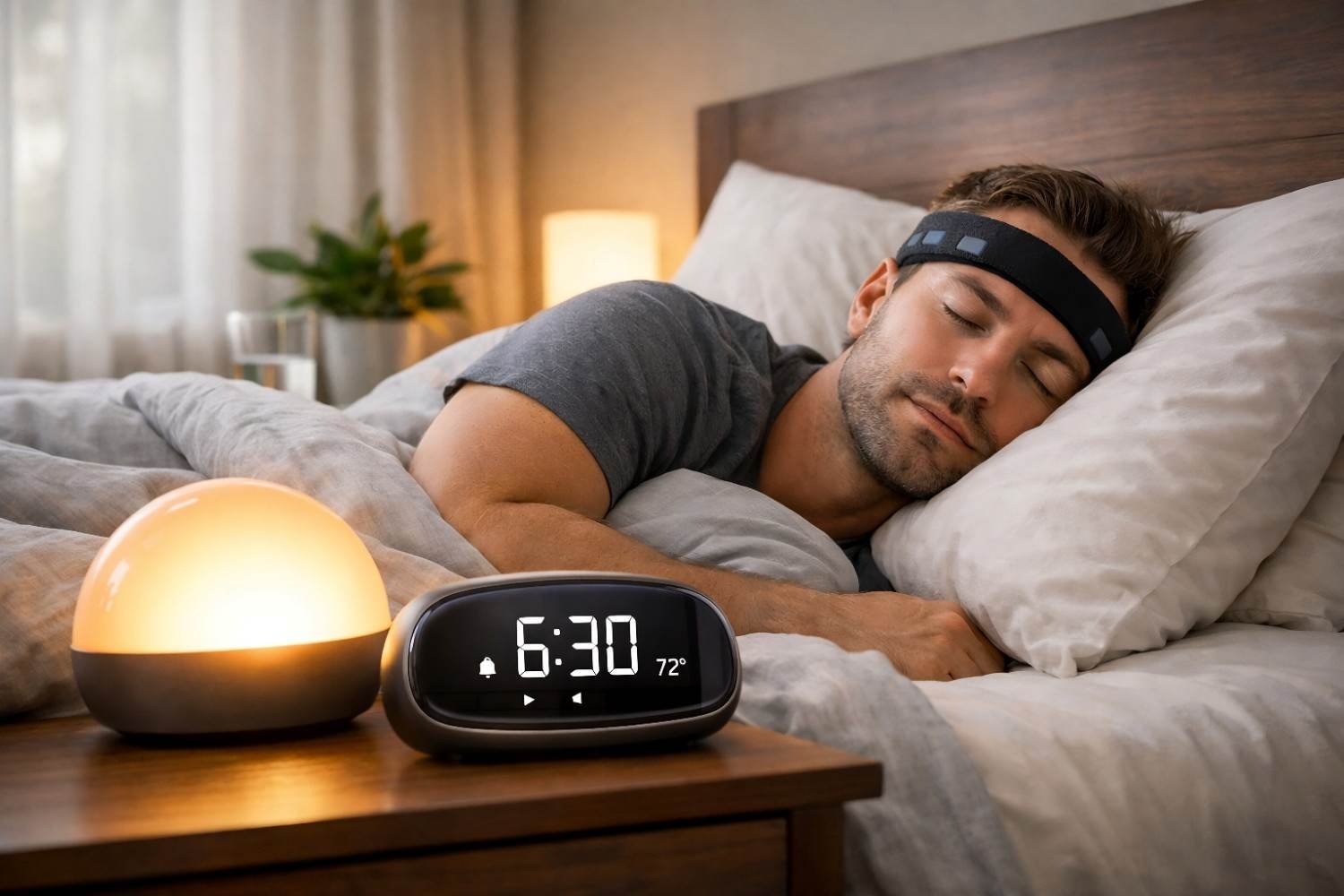
Light is one of the most useful tools for creating a consistent wind-down and wake-up routine.
Hatch Restore 3 combines dimmable light, sleep sounds, wind-down routines, and a sunrise alarm that gradually brightens before wake-up time. I like this approach because it gives me fewer reasons to keep my smartphone beside the bed and creates repeatable cues for both nighttime and morning.
Smart bulbs can do something similar. I can schedule warmer, dimmer lighting before bed and brighter light around wake-up time instead of leaving my home brightly lit until the moment I try to sleep.
Can Sleep Earbuds and White Noise Help With Nighttime Distractions?
For noisy apartments, urban neighborhoods, travel, or a snoring partner, sound technology can make the sleep environment more predictable.
Ozlo Sleepbuds 2 are designed specifically for overnight use and rely on noise masking rather than conventional active noise cancellation. MUSICOZY sleep headbands and masks offer a simpler alternative for playing white noise, calming music, rainfall, or other sleep audio without placing standard headphones over the ears.
I keep sleep sounds at a comfortable level. The goal is not more stimulation; it is reducing sudden environmental changes that might wake me.
How Do I Stop Sleep Technology From Making Sleep Worse?
More information does not automatically create better sleep. If I wake up and immediately feel stressed because my sleep or readiness score looks poor, tracking may be working against me. This sleep-score anxiety is sometimes described as orthosomnia.
I prefer weekly trends over obsessing about individual nights.
I also use a technology cutoff roughly an hour before bed whenever possible. Apple’s Sleep Focus and Android’s Bedtime Mode can silence notifications and reduce distractions. Warmer screen settings may help make nighttime devices less visually stimulating, but they cannot turn an hour of work email, gaming, stressful news, or endless social media into a relaxing bedtime routine.
Privacy matters as well. Smart beds and wearables can collect information about heart rate, temperature, movement, sleep timing, and daily routines. Before committing to a platform, I check its privacy settings, subscriptions, sharing controls, and data-deletion options.
Which Sleep Technology Should I Choose for My Biggest Problem?
If I wake up too hot or cold, I would prioritize a smart thermostat or temperature-controlled bed system. If I dislike wearing anything overnight, I would consider an under-mattress tracker. If morning grogginess or sleep inertia is the problem, a sunrise alarm paired with a consistent wake time may make more sense by helping me transition more gradually from sleep to wakefulness.
If I want a wider view of recovery and health trends, a smart ring or smartwatch may offer more useful data.
For persistent insomnia, serious daytime sleepiness, or loud snoring accompanied by breathing pauses, I would move beyond consumer gadgets and speak with a qualified healthcare professional.
Frequently Asked Questions (FAQs)
1. What Is the Best Sleep Technology for Beginners?
I would start with one affordable tool that solves an obvious problem, such as a sunrise alarm, smart lighting routine, white noise machine, Bedtime Mode, or basic sleep tracker. More expensive technology is not automatically more effective.
2. Are Sleep Trackers Accurate Enough to Trust?
Sleep trackers can be useful for identifying trends, but they estimate sleep rather than reproduce a complete clinical sleep study. I use them to understand patterns instead of assuming every sleep-stage measurement is exact.
3. Can Technology Help Me Fall Asleep Faster?
It may help by supporting a predictable wind-down routine, reducing disruptive noise, dimming evening light, limiting notifications, or making the bedroom more comfortable. A gadget alone is unlikely to fix chronic sleep problems.
4. Should I Keep My Phone Out of the Bedroom?
I do not think everyone needs to remove it completely, but reducing unnecessary bedtime phone use can help. A scheduled focus mode, charging the phone away from the bed, or replacing the phone alarm with a sunrise clock can reduce temptation.
Conclusion
For me, technology for better sleep habits works best when it quietly reinforces behaviors I would want even without a gadget: a consistent schedule, fewer distractions, comfortable temperatures, calmer evenings, and a regular wake-up time. Together, these habits can form an ideal nighttime routine that makes winding down feel natural instead of forced.
Smart rings, AI mattress systems, contactless trackers, sunrise alarms, and sleep audio can all play a role, but the smartest sleep setup is ultimately the one that helps me think less about technology when it is time to rest.