I have found that choosing rugs for an open-plan home is less about finding several beautiful designs and more about creating connections between them. Each rug should give its area a clear identity without making the wider room feel divided.
When deciding how to choose rugs for an open layout, I begin with the furniture arrangement, daily activities and walking routes. Colour and pattern come later. This practical order prevents expensive sizing mistakes and creates a home that feels balanced from every viewpoint.
Identify the Purpose of Every Zone
An open room may contain a conversation area, dining space, kitchen, entrance and workspace without physical walls separating them. Before shopping, decide which zones genuinely need rugs.
A living area normally benefits from one because it brings the sofa and chairs together. A dining rug can distinguish the table from nearby seating, but it may be unnecessary if lighting or furniture placement already defines that zone. Kitchens usually need only a runner near the main preparation area.
Too many rugs can chop a large room into small visual islands. Start with the main seating area, then add another rug only where it improves comfort, acoustics or spatial definition.
Measure Furniture Groups, Not the Whole Room
Measure each functional area independently. In a living zone, the rug should be at least as wide as the seating arrangement. Ideally, all furniture legs should rest on it. When that is impractical, place the front legs of the sofa and chairs on the rug so every piece appears connected.
For a dining area, measure the table and add approximately 60–75 centimetres on every side. This extra surface allows people to pull out their chairs without catching the rear legs on the rug’s edge.
Mark the proposed dimensions with removable painter’s tape. Walk around the outline, pull out dining chairs and open nearby doors. Viewing the taped shape from the kitchen, entrance and seating area reveals whether it looks balanced throughout the open room.
Choose a Lead Rug First
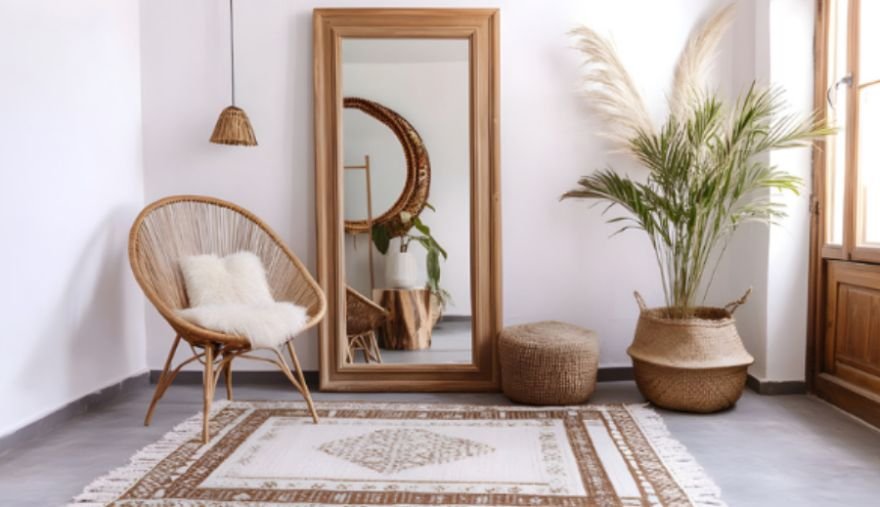
Select one rug to guide the scheme. This will usually sit in the largest or most prominent zone. A patterned living-room rug, for example, can establish the colours that appear more quietly in the dining area.
The lead rug does not have to be the brightest. It simply needs the strongest relationship with the furniture, flooring and overall mood. Once it is selected, choosing supporting rugs becomes easier because every additional option has a clear visual reference.
If the furniture and artwork are already colourful, make a neutral or lightly textured design the lead. This prevents the floor from competing with everything above it.
Coordinate Without Matching Everything
Rugs visible from the same position should look related, but they do not need to be identical. Repeating one or two colours is usually enough to form a connection. A muted blue vintage rug can work beside a cream flatweave with a narrow blue border, for example.
Undertones are just as important as obvious colours. Warm beige, rust and olive generally sit comfortably together, while icy grey may appear disconnected. Cooler blues, slate and crisp white create a different but equally cohesive direction.
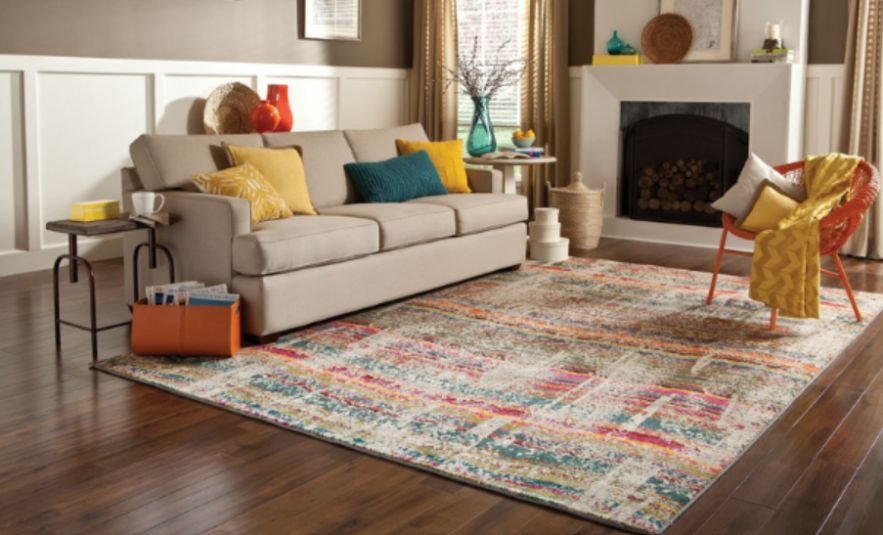
The surrounding floor also affects the result. Warm timber often suits earthy or softly aged colours. Pale flooring can support gentle neutrals or stronger contrast. Rather than trying to hide the floor completely, treat it as the background connecting all the rugs.
Balance Patterns and Textures
A safe approach is to vary pattern or texture rather than changing both dramatically. Pair a detailed traditional rug with a plain woven design, or combine two similarly textured rugs featuring patterns of different scales.
One rug should usually command attention while the others remain quieter. Placing multiple saturated, high-contrast patterns next to one another can make the layout restless. If two patterned designs are necessary, connect them through colour and make sure one motif is noticeably larger or simpler.
Natural-fibre and tonal rugs are useful visual buffers. They can sit beside vintage, geometric or abstract designs without introducing another dominant motif. Matching rugs can also work, particularly in symmetrical zones, provided the furnishings supply enough variation.
Match the Material to Daily Life
Appearance should not outweigh function. The same principle applies when preparing a room for visitors: flooring, furniture, lighting, and other practical details should work together to make the space comfortable and easy to use. These ways to prepare a spare room for guests can help you organise those final details.
Dining areas need low-pile or flatwoven rugs that allow chairs to slide smoothly and make crumbs easier to remove. A thick shag rug may feel comfortable in a sitting area but is poorly suited to frequent spills or rolling chairs.
Busy households can benefit from dense wool, durable synthetic blends or washable constructions. Homes with pets should avoid loose loops that may catch claws. Patterned mid-tone rugs tend to disguise minor marks better than very pale, solid surfaces.
Check the care label before purchasing.
It is also worth considering the condition of the surrounding floor, especially in areas where mineral deposits or water marks are common. These easy methods for removing hard water stains can help keep hard surfaces looking clean.
“Washable” can mean machine washable, suitable for professional cleaning or merely safe for careful spot treatment. Large machine-washable rugs may also exceed the capacity of a domestic washing machine.
Protect Movement Through the Room
Open layouts depend on uninterrupted circulation. Rugs should define activities without blocking the natural route between the entrance, kitchen, dining table and seating area.
Avoid placing a rug edge directly across a heavily used pathway where people may repeatedly step on it. Leave visible flooring between neighbouring rugs so the zones remain distinct. The gap does not need to be identical everywhere, but it should appear deliberate rather than accidental.
Check the pile height around doors, cabinet fronts and floor vents. A rug that interferes with a swinging door will quickly become frustrating, regardless of how attractive it looks.
Use the Right Rug Pad
A suitable rug pad reduces movement, protects the flooring and helps prevent curled edges from becoming trip hazards. It can also soften footfall and reduce echoes, which are common in large rooms containing hard surfaces.
Choose a pad compatible with both the rug backing and floor finish. Cut it slightly smaller than the rug so it remains hidden. In dining areas, avoid excessively thick pads because they can make chairs unstable and harder to move.
Mistakes That Make the Layout Feel Disconnected
The most frequent mistake is choosing a rug that is too small for its furniture group. A small rug floating beneath a coffee table separates the seating instead of uniting it.
Other problems include buying several statement rugs, ignoring flooring undertones and selecting materials unsuited to the zone. Purchasing every rug at once can also lead to costly errors. Begin with the lead rug, test it in natural and artificial light, and then choose the supporting pieces.
Frequently Asked Questions
1. Should rugs in an open layout match?
No. They can differ in design while sharing a colour, undertone, material or overall style. Coordination usually appears more natural than using an identical rug in every zone.
2. How many rugs should an open-plan room contain?
There is no fixed number. One rug per clearly defined zone is a useful maximum, but some areas may not require one. Two well-positioned rugs often look better than four small designs.
3. What is the easiest way to learn how to choose rugs for an open layout?
Choose the main rug first, size every rug to its furniture grouping and repeat at least one visual element across adjoining zones. Use painter’s tape to test placement before ordering.
4. Can I combine traditional and modern rugs?
Yes. Connect them through a shared colour and vary the pattern scale. Let one design provide the main visual focus while the other plays a supporting role.
Final Thoughts
I believe the most successful open layouts feel connected without becoming repetitive. I start with function, measure each furniture zone and choose one rug to establish the visual direction. Supporting rugs can then introduce contrast through restrained changes in colour, pattern or texture.
When sizing, circulation, maintenance and flooring undertones are considered together, every rug feels intentional—and the open room remains comfortable, practical and visually complete.