
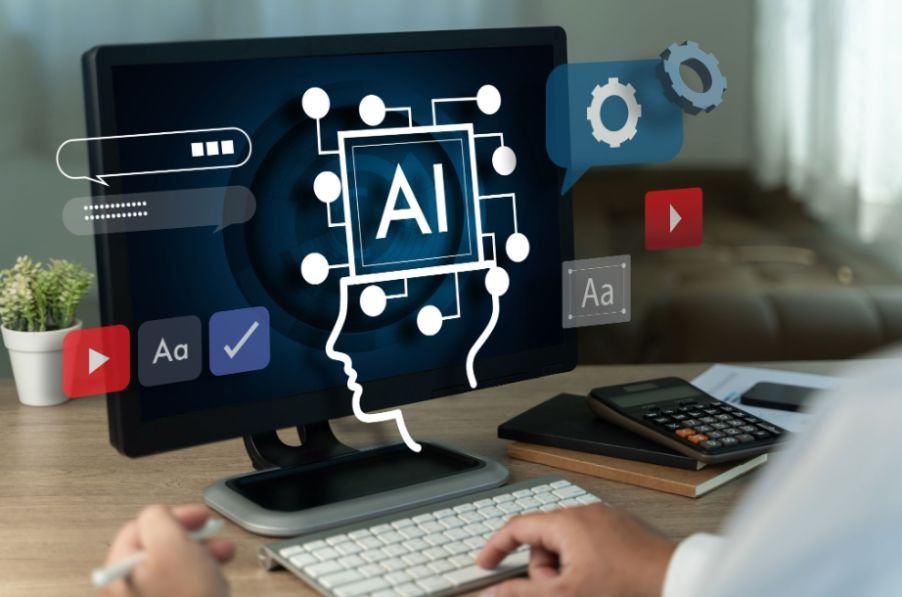
You do not need to code, build machine-learning models, or work in IT to benefit from artificial intelligence. In 2026, many of the most useful AI tools for non-technical users work like no-code assistants: explain what you want in everyday English, then refine the result through conversation. If you can describe a task in a text message, you can usually get started.
For US professionals, small-business owners, freelancers, and remote teams, the real question is which tool saves the most time.
Do You Need Technical Skills to Use AI in 2026?
For most everyday tasks, no. Modern AI platforms hide the technical complexity behind chat boxes, document uploads, voice input, and familiar workplace apps. Start with one recurring problem—writing emails, researching competitors, creating presentations, organizing notes, or building a simple site—and choose one tool that solves it well.
What Are the Best AI Tools for Everyday Assistance and Writing?
ChatGPT: Best All-Around AI Assistant
ChatGPT is my strongest general-purpose starting point because it can handle brainstorming, drafting, rewriting, planning, file analysis, web research, images, data analysis, and voice. It is especially useful when you need an assistant to follow detailed instructions, checklists, or repeatable templates.
Claude: Best for Long-Form Writing

Claude is a strong choice for reports, blogs, editing, document review, and maintaining a consistent voice. Anthropic also supports file analysis and document creation through natural-language prompts.
Grammarly: Best for Polishing Existing Writing
Grammarly fits users who want help refining rather than replacing their writing. It can assist with drafting, rewriting, tone, and email replies. For US professionals who spend much of their day communicating by email, that can be more useful than generating every document from scratch.
Wispr Flow and Superwhisper: Best for Voice-to-Text
Wispr Flow and Superwhisper turn spoken thoughts into polished text. Both are useful when typing slows you down, whether you are drafting emails, capturing ideas, or dictating messages across apps. Wispr Flow works across major desktop and mobile platforms, while Superwhisper also supports hotkey-based dictation and on-device workflows.
Which AI Tools Are Best for Research and Documents?
Perplexity: Best for Web Research With Sources
Perplexity searches the web, synthesizes answers, and provides citations to sources. I find it particularly useful for market research, product comparisons, travel planning, and early fact-checking because I can quickly inspect where information originated.
NotebookLM: Best for Researching Your Own Sources
Google’s NotebookLM is built around source-grounded research. You can bring in documents and other research material, ask questions, create summaries, and develop useful outputs from your source collection. Google expanded its research and analysis capabilities further in 2026.
This is especially helpful when you have long PDFs, reports, study materials, company documents, or a collection of resources that would otherwise take hours to review manually.
What Are the Best AI Tools for Design and Presentations?
Canva AI is my pick for non-designers who need social graphics, marketing materials, presentations, or other visual content without learning professional design software. Canva’s Magic Studio brings AI-powered creation directly into its familiar visual workspace.
Gamma is better when speed is the main priority. You can give it a prompt, outline, or existing document and have it generate a designed presentation with structure, copy, layouts, and visuals. You can then edit or export the result, making it useful for pitch decks, sales proposals, internal meetings, and training materials.
Which AI Tools Work Best Inside the Office?
Microsoft 365 Copilot makes the most sense for US organizations already working in Word, Excel, Outlook, and PowerPoint. It brings AI into familiar Microsoft apps for writing, summarizing, analysis, and presentation work.
Gemini for Google Workspace serves a similar purpose inside Gmail, Docs, Sheets, Slides, Drive, and Chat. It can draft emails, summarize documents, create content, and work with spreadsheet information without forcing users to constantly switch applications.
Notion AI is useful when the bigger challenge is organization. For teams looking to move beyond individual AI assistance, AI agents for customer service and operations can take on more structured, recurring workflows across customer interactions and internal processes.
It can search workspace information, improve documents, capture meeting notes, research topics, and automate recurring workflows. I would consider it especially useful for project-heavy teams, agencies, startups, and growing small businesses.
Can a Non-Coder Build an App or Website With AI?
Yes. Lovable lets you describe a website or app in plain language and generates working software that you can continue refining through conversation.
For a US founder or small-business owner, that can speed up early prototyping dramatically.
AI can also support the broader process of starting and running a one-person venture, from validating an idea to handling repetitive business tasks, as shown in this guide to building a solo business with AI tools.
Instead of beginning with programming languages, databases, and front-end frameworks, you can begin by explaining the business idea, audience, pages, features, and workflow you want.
ChatGPT vs. Claude vs. Perplexity: Which Is Better?
I would choose ChatGPT for broad everyday assistance, detailed checklists, and multi-step instructions. I would choose Claude when long-form writing, editing, or document-heavy work is the priority. Perplexity is my choice when current web research and visible source citations matter most.
Each platform provides an accessible entry point, while paid subscriptions offer additional capacity or features. For example, ChatGPT Plus and Claude Pro are currently priced at $20 per month in the US, although plans and features can change over time.
Rather than subscribing immediately, I would test the free options against a real task first.
How Should a Beginner Choose the Right AI Tool?

Start with the task that wastes the most time. If you write constantly, try ChatGPT, Claude, or Grammarly. If research consumes your day, use Perplexity or NotebookLM. If presentations are painful, try Gamma. If design is the bottleneck, Canva makes more sense. If your workplace already depends on Microsoft 365 or Google Workspace, I would start with the AI built into that ecosystem.
Privacy matters too, especially when it comes to protecting personal information. Before uploading contracts, customer records, financial information, or confidential workplace files, review the platform’s current data and privacy settings. AI can support human judgment, but it should not replace professional review in legal, medical, financial, or other high-stakes situations.
Frequently Asked Questions
1. What is the easiest AI tool for a complete beginner?
ChatGPT is one of the easiest general starting points because you can describe what you need in conversational English and improve the result through follow-up instructions.
2. What is the best free AI tool for non-technical work?
The answer depends on what you want to accomplish. Several major platforms provide free access or starter tiers, so I recommend testing a real work task before paying for a subscription.
3. Do I need to learn prompt engineering to use AI?
No. Clear context usually matters more than complicated prompt formulas. Tell the tool what you need, who the output is for, what format you want, and any important limitations.
Final Thoughts
The best AI tools for non-technical users do not require you to become a programmer or understand how machine-learning models work. They reduce the distance between an idea and a useful result.
I would start with one general assistant, add one specialized tool for your biggest recurring task, and expand only when the workflow proves valuable. For most people, learning a few useful tools well delivers far more value than signing up for every new AI platform that appears.