
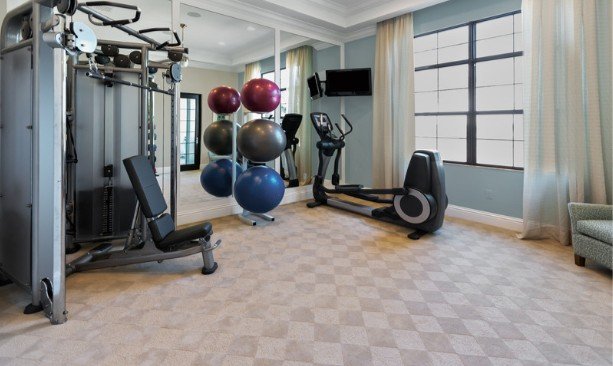
I once assumed that creating a worthwhile home gym required a large spare room and several expensive machines. However, I have learned that a carefully planned corner can support an impressively varied routine.
The key is to match the layout and equipment to the exercises I will actually perform. When considering how to set up a compact home gym, I begin with clear goals, accurate measurements, and equipment that provides several training options without permanently occupying the floor.
Decide How You Want to Exercise
Start by identifying your main training style. A gym designed for yoga and mobility work will look very different from one intended for barbell lifting. Your priorities might include general fitness, muscle building, low-impact cardio, flexibility, rehabilitation, or a combination of strength and conditioning.
List the exercises you perform most frequently. This prevents you from buying an impressive machine that consumes valuable space but rarely gets used. Someone interested in general fitness may need only adjustable dumbbells, resistance bands, and a mat. A dedicated strength trainee might require a compact bench, weights, and a folding rack.
Choose equipment based on current habits rather than routines you might follow someday. You can always expand the setup after identifying a genuine limitation.
Measure More Than the Floor
Record the length and width of the available area, but do not stop there. Measure the ceiling height, doorways, windows, outlets, built-in cabinets, and any furniture that will remain in the room. Check whether doors and drawers can open completely once the equipment is installed.
Consider operating space as well as storage space. A treadmill may look compact when folded but need additional room when lowered. An indoor rower machine requires space along its entire rail. Cable handles travel beyond the machine’s frame, and an adjustable bench needs room to change positions.
Use removable tape to mark each proposed footprint on the floor. Step inside the remaining space and practise squats, lunges, push-ups, and overhead movements. This test can expose layout problems before you spend money.
Create Clear Activity Zones
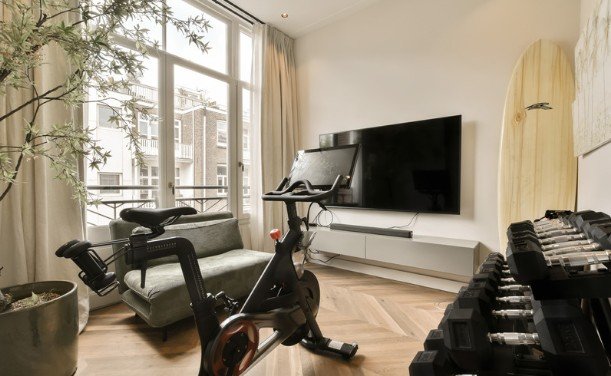
Divide the available space into an open exercise zone, an equipment zone, and a storage zone. These areas do not need permanent boundaries, and they may overlap when equipment can be folded or moved.
Keep the centre as open as possible for warm-ups, bodyweight exercises, stretching, and mobility work. Place heavier equipment near a suitable wall while keeping exits and walking routes unobstructed. Store lightweight accessories above or beside the main equipment.
Arrange frequently used items within easy reach. Equipment that is difficult to retrieve or put away creates friction and makes short workouts less appealing. Every item should have a defined storage position once the session ends. Regular cleaning, including suitable methods for removing hard water stains from mirrors or nearby fixtures, also helps keep the workout area fresh and inviting.
Select Versatile, Space-Saving Equipment
In a small gym, every purchase must justify its footprint. Adjustable dumbbells replace several pairs of fixed weights. Resistance bands can support rows, presses, assisted movements, and mobility exercises. An adjustable bench provides options for pressing, step-ups, split squats, seated exercises, and supported rows.
Kettlebells, sliders, suspension straps, yoga blocks, and a foam roller also provide considerable variety without demanding much storage. Serious strength trainees might consider a folding rack, but installation must suit the wall structure and manufacturer’s requirements.
For cardio, compare compact bikes, folding treadmills, steppers, and skipping ropes according to noise, storage size, user weight capacity, and operating clearance. Select equipment that matches both the room and your preferred activity. A smaller machine is not a good investment if it produces an uncomfortable workout.
Install Appropriate Flooring
Suitable flooring protects the existing surface, improves grip, and helps control noise. Dense rubber tiles or equipment mats are generally more stable beneath weights and machines than soft foam. A basic exercise mat may be sufficient for yoga, stretching, and light bodyweight sessions.
Do not assume that flooring will eliminate all sound. Heavy footsteps, jumping, and dropped weights can transmit vibration through walls and floors. This is particularly important in upstairs rooms and shared buildings. Controlled lifting, dense pads, and low-impact cardio can reduce disturbance.
Extremely heavy equipment may require an assessment of the floor’s capacity. Wall-mounted racks, storage systems, and pull-up equipment must also be fixed to an appropriate structure. Seek professional guidance when structural strength or installation safety is uncertain.
Make Use of Vertical Storage
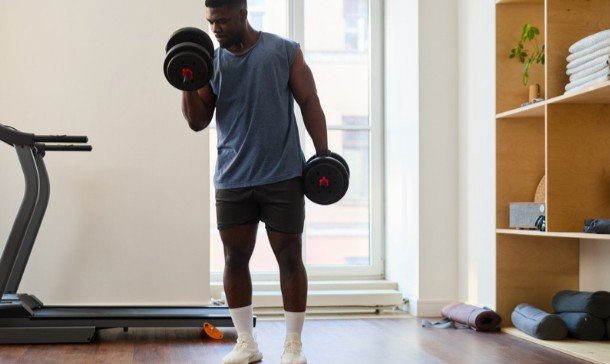
Vertical storage frees the floor without making equipment difficult to access. Secure hooks, pegboards, rails, and narrow shelving can hold bands, skipping ropes, mats, and lightweight accessories. Vertical stands can organize weight plates or dumbbells within a limited footprint.
Keep heavy items close to floor level to reduce injury risks. Shelves and hooks should not project into the path of overhead exercises. Storage must also remain clear of heaters, electrical equipment, windows, and doors.
A shared room may benefit from concealed storage. Cabinets, benches with internal compartments, or strong baskets can hide smaller items and allow the room to return to its normal purpose after exercise.
Improve Lighting and Ventilation
Small exercise areas can become hot and uncomfortable quickly. Use available ventilation, open windows when appropriate, or add a suitable fan. Leave enough clearance around equipment so air can circulate and moving components do not overheat.
Provide bright, even lighting across the entire training area. Avoid placing lights where they create glare on screens or mirrors. A mirror can make the space feel larger and help with basic positioning, but it should be securely installed and kept away from areas where weights could strike it.
Keep water and a clean towel nearby. Wipe down equipment after use and allow damp mats, pads, or straps to dry before storing them.
Build the Setup in Stages
Begin with a simple foundation rather than furnishing the entire gym immediately. A mat, resistance bands, and adjustable weights can support many effective workouts. Follow your routine for several weeks before adding another major item.
A gradual approach protects your budget and shows which upgrades will deliver meaningful value. Before purchasing used equipment, inspect its frame, fasteners, cables, padding, adjustment points, and moving parts. Confirm that replacement components are available when necessary.
Frequently Asked Questions
1. How to set up a compact home gym in a shared room?
Choose portable or folding equipment, keep the central area open, and provide concealed storage. Arrange the gym so the room can quickly return to its original function.
2. How much space does a small home gym need?
The required area depends on the workout. Bodyweight and mobility exercises need enough room to lie down and extend your arms, while machines and weights require additional operating clearance.
3. What should a beginner buy first?
A supportive mat, resistance bands, and adjustable dumbbells offer a practical starting point. Additional equipment should solve a specific limitation in the beginner’s established routine.
4. Can heavy gym equipment damage the floor?
Heavy equipment, impacts, and repeated vibration can mark flooring or affect unsuitable structures. Use appropriate protective mats and obtain expert advice when installing particularly heavy equipment.
Final Perspective
I would rather have a simple gym that I use regularly than an overcrowded room filled with unnecessary equipment. By measuring carefully, preserving an open movement zone, selecting versatile gear, and storing everything safely, I can make even a modest area feel purposeful. The best compact setup is one that fits naturally into daily life and removes obstacles between me and my next workout.















One thought on “How to Set Up a Compact Home Gym That Truly Works”