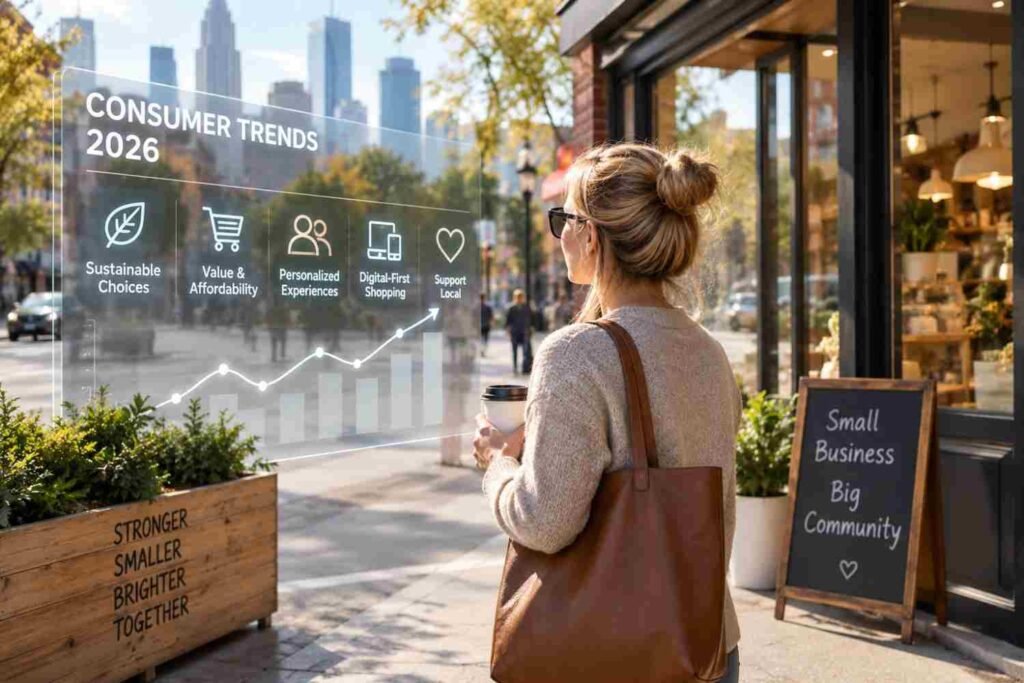
I started noticing how differently people shop when prices, convenience, and experience all compete for attention. A customer might hesitate over an everyday purchase, then happily spend on a dinner, local event, or product that feels genuinely worthwhile. That contrast made me realize that consumer behavior is becoming harder for small businesses to read through old assumptions.
I also found that technology is changing the path to purchase in quieter ways. Customers can discover a business through social media, compare options instantly, ask an AI tool for recommendations, and expect checkout to take seconds. For small businesses, these shifts are not distant trends. They are changing what customers notice, expect, and ultimately choose.
Consumers Are Becoming More Selective About Value
The K-shaped economy is one of the clearest forces shaping consumer spending in 2026. Higher-income households continue to support discretionary spending, while many middle- and lower-income shoppers remain focused on essentials, discounts, and purchases that clearly justify their cost. That split creates a difficult environment for small businesses because the same product can face very different reactions from different customers.
The answer is not necessarily to become the cheapest option. Small businesses can compete by making value easier to understand. Clear pricing, useful bundles, dependable quality, and honest explanations of what a customer gets for the money can matter more than a constant stream of discounts. A business selling a premium product also needs to explain why the premium exists.
Cost pressures make this harder. Labor, supplies, shipping, and tariffs can squeeze margins just as customers become more careful with spending. Sudden price changes can damage trust, but absorbing every increase can hurt the business. Transparent communication and thoughtful pricing can help owners protect both relationships and margins.
Convenience Is Becoming Part of the Product

Customers increasingly judge the entire buying process, not only what they purchase. A great product can lose the sale if finding information is difficult, checkout is slow, or basic questions take too long to answer.
Mobile-friendly ordering, contactless payments, simple scheduling, delivery options, and fast communication can remove small points of friction. Digital wallets are particularly useful when customers expect transactions to happen quickly, whether they are buying coffee, booking a service, or purchasing something at a local store.
Convenience does not mean eliminating human interaction. It means giving customers control over when they want speed and when they want help. A small business can automate routine steps while keeping real people available for complicated questions or higher-value conversations.
AI and Social Discovery Are Changing How Customers Find Businesses
AI-driven shopping is moving beyond chatbots and content creation. Agentic commerce points toward systems that can research products, compare alternatives, evaluate information, and potentially complete purchases for consumers. That means businesses may increasingly need accurate product details, clear policies, reliable inventory information, and strong digital foundations.
Social platforms also play a major role in discovery. A customer may encounter a product in a short video, see it demonstrated by a creator, read comments, and visit the business later. This makes useful demonstrations, authentic customer proof, and clear online information more valuable than simply posting frequent promotional messages.
Small businesses do not need to predict exactly which AI shopping system will dominate. They do need digital information that is accurate, accessible, and easy for both people and emerging shopping tools to understand.
In-Person Experiences Still Have Pull
The growth of digital commerce has not eliminated the desire for physical connection. Consumers are increasingly interested in spaces that provide community, entertainment, learning, or a reason to stay longer.
That creates an opportunity for small businesses to make the physical experience part of their competitive advantage. A bookstore can host discussions. A café can become a gathering place. A retailer can run workshops or demonstrations. A service business can create a more welcoming experience rather than treating every visit as a transaction.
These ideas can also support sustainable growth for small businesses because stronger relationships may encourage repeat visits and referrals. The goal is not to manufacture a social experience where none belongs. It is to identify what customers already value and build around it.
How Small Businesses Can Respond Without Chasing Every Trend

Not every consumer trend deserves an immediate investment. Owners can start by watching their own customers closely. Which products are selling together? Where do people abandon purchases? What questions appear repeatedly? Which promotions attract attention but fail to create profitable sales?
A practical response might involve:
- Simplifying checkout and payment options
- Reviewing prices and communicating changes clearly
- Improving product information for search and AI discovery
- Creating experiences that encourage customers to return
- Testing new channels before committing significant resources
The bigger lesson is flexibility. A business that can listen, test, measure, and adjust has a better chance of responding to changing demand than one that tries to copy every emerging trend.
FAQs: Understanding Consumer Trends Affecting Small Businesses in 2026
1. What is the K-shaped economy?
It describes an uneven recovery in which higher-income consumers maintain or increase discretionary spending while lower-income households face tighter budgets and prioritize essentials.
2. How is AI changing shopping?
AI can help consumers discover products, compare choices, research businesses, and increasingly automate parts of the purchasing process.
3. Why do in-person experiences matter?
Physical spaces can provide community, entertainment, expertise, and personal connection, giving small businesses ways to compete beyond price.
4. Should every small business adopt every new trend?
No. Businesses should prioritize trends that match their customers, economics, and capabilities, then test changes before making major investments.
Why Adaptability Matters More Than Prediction
Consumer trends affecting small businesses are not moving in one direction. Customers can demand lower prices in one moment and pay more for something meaningful in another. They can embrace digital convenience while still wanting a place where they recognize familiar faces. The businesses best positioned for this environment are not necessarily those with the biggest technology budgets. They are the ones paying attention, understanding where customer expectations are shifting, and making measured changes without losing sight of what already works.
That mindset turns uncertainty into something manageable for owners who stay curious, disciplined, and close to customers instead of chasing headlines. Small businesses cannot control consumer behavior, costs, or emerging technology, but they can control how quickly they listen and respond. In a market that keeps changing, that may be the most durable advantage of all.