
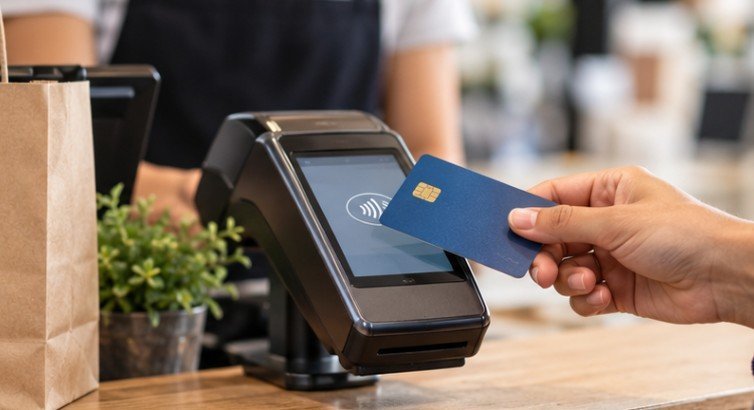
A credit card can cost you nothing in interest—or more than 20% a year—depending on how you use it. The Federal Reserve’s September 2026 consumer-credit release shows the latest reported average APR at commercial banks was 20.94% across credit-card accounts and 22.15% for accounts actually charged interest.
That is why understanding how credit cards work for beginners matters before the first swipe. A credit card is not extra income. It is a reusable line of credit: the issuer pays the merchant, you owe the issuer, and your repayment choices determine whether the card becomes a useful tool or expensive debt.
What Happens When You Use a Credit Card?
Suppose your card has a $2,000 credit limit and you buy $120 of groceries. Your available credit falls to $1,880 and your balance rises by $120.
At the end of the billing cycle, the issuer creates a statement listing purchases, payments, fees, interest, the minimum payment, and the due date. Paying at least the minimum keeps the account from becoming past due, but any unpaid balance can remain.
If your card offers a grace period and you meet its conditions, paying the statement balance in full by the due date can let you avoid interest on purchases. The Consumer Financial Protection Bureau’s guidance on credit-card grace periods says grace periods are common but not legally required, and they generally do not apply to cash advances.
Five Terms That Determine What Your Card Costs
| Term | Meaning | Why it matters |
| Credit limit | Maximum amount you may borrow | Using a large share can affect credit scores |
| Statement balance | Amount owed when the cycle closes | Paying it in full can help avoid purchase interest |
| Minimum payment | Smallest required monthly payment | Paying only this can prolong debt |
| APR | Annualized interest rate | Higher APRs make carried balances expensive |
| Due date | Monthly payment deadline | Missing it can trigger fees and hurt credit |
Minimum Due Is Not the Same as Paid in Full

This is where many first-time users get into trouble. The minimum payment is a compliance threshold, not an ideal repayment plan.
If your statement balance is $1,000 and your minimum is $35, paying $35 may keep the account current, but the rest can continue accumulating interest. The FDIC’s credit-card guidance warns that paying only the minimum can create significant long-term costs because interest continues on the unpaid balance.
Paying the full statement balance on time is different. When a grace period applies, it generally lets you avoid purchase interest. You also do not need to carry debt to build credit.
Why APR Matters More Than Rewards
Rewards are easy to notice. Interest is easy to underestimate.
A 2% cash-back card returns $20 on $1,000 of purchases. Carrying that same $1,000 balance at an APR above 20% can erase the reward quickly. Exact interest depends on daily balances and the issuer’s calculation method, but the principle is simple: rewards matter most when you are not paying substantial interest to earn them.
Cash advances can be even more expensive because they may have separate fees, different APRs, and no purchase-style grace period.
How Credit Cards Affect Your Credit
Card activity can be reported to Equifax, Experian, and TransUnion. Payment history, account age, new applications, and how much of your available credit you use can all influence your credit profile.
The FDIC recommends paying on time and keeping balances low relative to credit limits. A widely used rule of thumb is to stay below 30% utilization, but lower can be better; 30% should not be treated as a magic cutoff.
For example, a $300 reported balance on a $1,000 limit equals 30% utilization. A $100 balance equals 10%. You can also review your credit reports using the federally authorized process explained by USA.gov’s credit-report resource.
A Beginner-Safe System for Your First Card
Use a simple routine instead of treating the card as extra spending power:
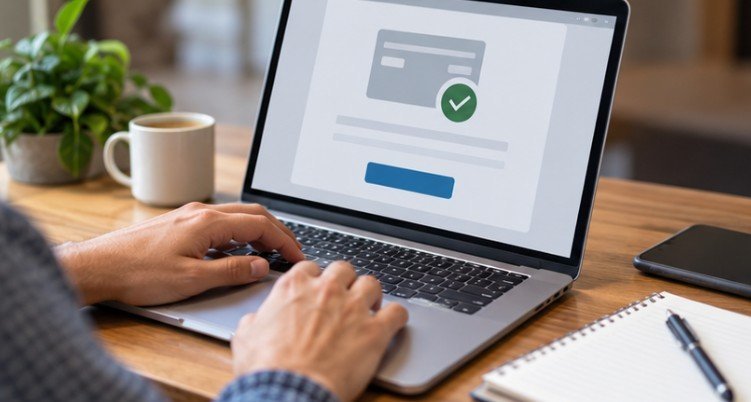
- Put only one or two predictable expenses on the card at first.
- Keep enough money in checking to cover every purchase.
- Turn on transaction alerts and autopay; ideally, pay the full statement balance.
- Review every statement for unfamiliar charges, fees, and rate changes.
- If you cannot pay the statement in full, stop adding new spending and focus on reducing the balance.
This makes the card behave more like a payment tool than a loan you depend on.
Credit Cards Also Carry Consumer Protections
Credit cards have protections that differ from debit cards. The Federal Trade Commission’s credit-card consumer guidance explains that federal law provides a process for disputing certain billing errors, to stop overspending including unauthorized charges, incorrect amounts, and some purchases that were never delivered.
For many billing errors, a written dispute must reach the issuer within 60 days after the first statement containing the error was sent. The FTC also explains that federal law generally limits liability for unauthorized credit-card charges to $50, although some issuers voluntarily offer stronger protections.
Reviewing statements and reporting suspicious activity quickly are therefore part of responsible card use.
Misconceptions That Cost Beginners Money
Carrying a balance does not improve your credit score. Paying interest is not required to build credit. The CFPB specifically identifies carrying a balance to improve a score as a credit myth.
Likewise, a $5,000 credit limit does not mean you can afford to spend $5,000. Your real spending limit should be what you can repay without borrowing again.
A 0% introductory APR also needs careful reading. The promotion may apply only to purchases or balance transfers, may include fees, and will eventually expire. Deferred-interest store offers can be more complicated because failing to clear the promotional balance may cause previously deferred interest to become payable under the offer’s terms.
Frequently Asked Questions
1. Is a credit card the same as a debit card?
No. A debit card generally uses money in your bank account. A credit card uses borrowed funds from an issuer that you repay later.
2. Do I need to carry a balance to build credit?
No. Paying on time and keeping balances low can help your credit profile. Carrying debt is unnecessary and can create interest charges.
3. What happens if I pay only the minimum?
Your account may remain current, but the unpaid balance can keep accumulating interest. Repayment may take longer and cost substantially more.
4. What is the safest rule for how credit cards work for beginners?
Spend only what you can afford, review every statement, and pay the full statement balance by the due date whenever possible.
Make Your First Credit Card Boring
The best first credit card is not the one that creates the most excitement. It is the one you can use predictably, pay on time, and monitor without stress.
Think back to that 20%-plus APR. The same card can help build credit history, provide purchase protections, and earn rewards when the balance is controlled—or make ordinary purchases expensive when repayment slips. Start with one card, a few planned charges, and a full-balance payment habit. If those three things become routine, you understand the part of credit cards that matters most.














One thought on “How Credit Cards Work for Beginners: A Simple U.S. Guide”