
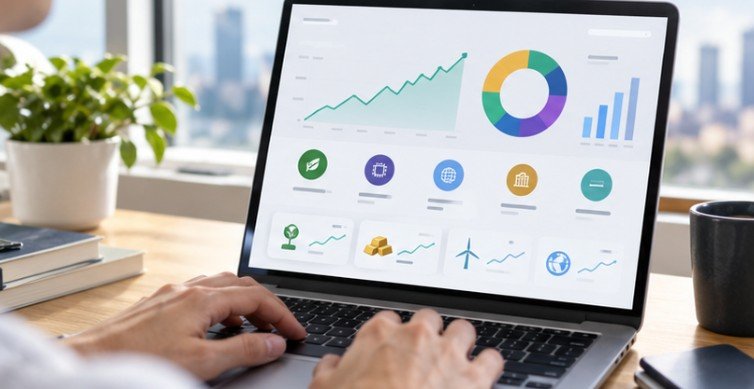
Nearly half of banked U.S. households now use mobile banking as their primary way to access an account. That helps explain why how fintech is changing personal finance is no longer a story about shiny apps. It is a story about who—or what—makes everyday money decisions.
The biggest change is subtle: financial software is moving from showing people what happened to helping decide what happens next. Budgets update automatically, savings transfers run in the background, investment portfolios rebalance themselves, and credit can appear at checkout in seconds.
Money Tools Are Starting to Act
Traditional personal finance depended on manual routines: categorize expenses, compare statements, move money, call an adviser. Modern fintech compresses those tasks into software.
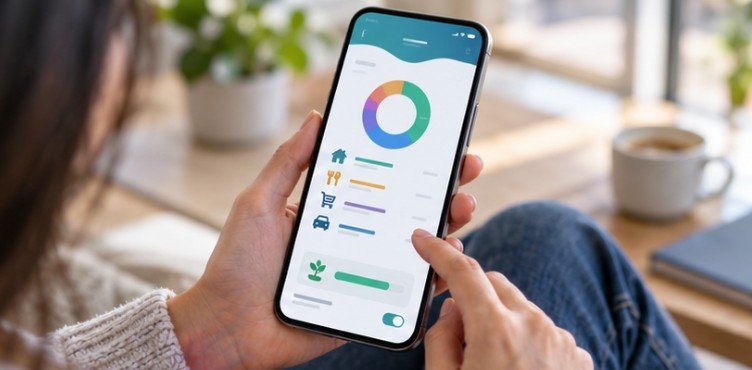
Budgeting apps can pull transactions from several accounts, label spending, flag unusual charges, and warn when cash flow is tightening. Savings tools can automate transfers or round purchases upward. AI-powered features increasingly add prompts based on recurring bills and past behavior.
That matters because good financial intentions often fail at execution. Automation can turn “I should save” into a scheduled action.
The weakness is context. Software may see a recurring payment but not understand that a job change, medical bill, divorce, or home purchase should alter the plan.
Banking Is Becoming a Service, Not a Place
The FDIC’s 2023 National Survey of Unbanked and Underbanked Households found that 48.3% of banked households primarily used mobile banking. It also found 4.2% of U.S. households were unbanked and 14.2% were underbanked.
That shows both sides of fintech. Mobile banking can reduce geographic and time barriers, yet an app does not solve minimum-balance requirements, fees, distrust, or unstable income. Access improves most when digital convenience is paired with transparent pricing and strong consumer protections.
Faster Payments Remove Useful Friction

The Federal Reserve’s research on changing U.S. payment behavior shows the shift clearly. In the 2024 Diary of Consumer Payment Choice, credit cards represented about 32% of payments, debit cards 30%, and cash 16%. Digital wallets, peer-to-peer apps, ACH transfers, and pay-by-bank systems are moving more transactions into software.
Speed is convenient, but it also removes the pause between deciding to pay and moving money.
A practical rule is to treat instant payment apps more like cash than credit cards: verify the recipient, protect the account with strong authentication, and understand where stored balances sit. Some nonbank payment-app balances may not have the same federal deposit-insurance protection as funds held directly at an insured bank or credit union.
Investing Is Becoming Dollar-Based
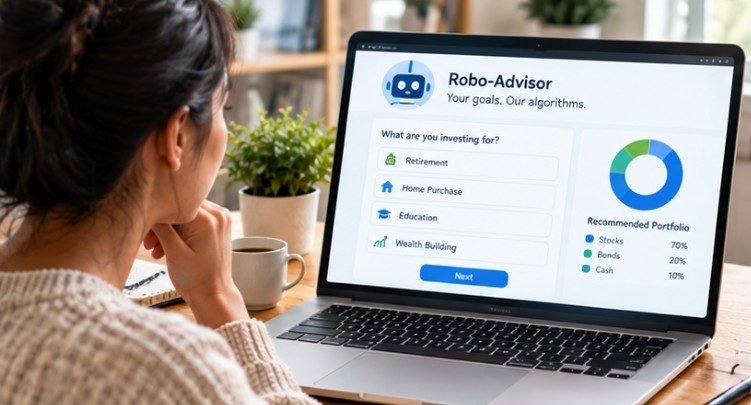
Robo-advisers can build and rebalance portfolios from questionnaires about goals, time horizon, and risk tolerance. Fractional shares let investors buy part of a stock or ETF instead of a whole share.
If a stock trades at $1,000 and an investor contributes $100, a brokerage offering fractional shares could provide roughly 0.1 share. FINRA’s guidance on fractional shares notes that fractional investing can improve access and portfolio flexibility, although transferability, voting rights, execution, and trading-hour rules can vary.
Robo-advice has a similar tradeoff. Investor.gov’s robo-adviser guidance explains that automated advisers may lower costs or account minimums, but recommendations depend on the information collected. An online questionnaire may not capture every debt obligation, tax issue, family responsibility, or near-term cash need.
Lower friction does not mean lower investment risk.
Credit Is Moving Into the Checkout Flow
One of the clearest examples of how fintech is changing personal finance is buy now, pay later. Credit can now appear as another payment button beside debit or credit cards.
CFPB research on buy now, pay later borrowing found that more than one-fifth of consumers with a credit record used BNPL loans in 2022, and more than three-fifths of BNPL borrowers had multiple simultaneous loans at some point that year.
The danger is fragmentation. Several small installment plans can look manageable separately while collectively competing with rent, utilities, card payments, and savings.
Use this test: imagine the full remaining BNPL balance were due today. If paying it would drain emergency savings or force new borrowing, the purchase is probably less affordable than the checkout screen suggests.
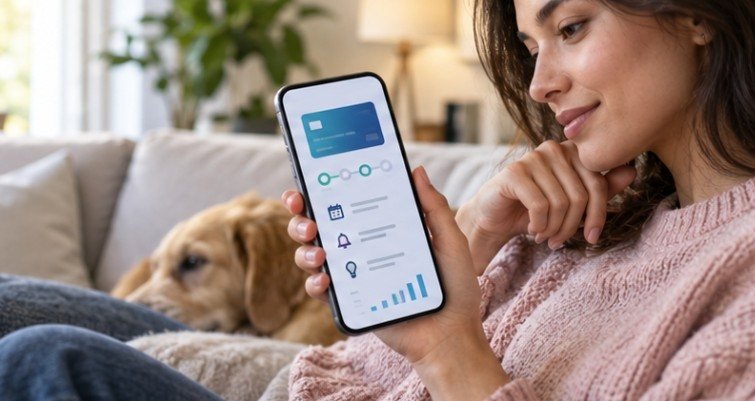
Financial Data Is Becoming Portable
Account aggregation and open-banking connections let consumers link banks, budgeting tools, lenders, and investment services. That can reduce repetitive data entry and improve personalization.
It also creates a new financial skill: permission management. Users should know what an app can access, whether data can be shared, and how access can be revoked.
The U.S. framework is still evolving. The CFPB finalized a personal financial data-rights rule in 2024, but compliance dates were stayed by a federal court on October 29, 2025 while the agency considers possible revisions. The direction remains important: consumer-permissioned financial data is increasingly becoming part of the infrastructure behind fintech.
A Five-Minute Fintech Audit
Before giving a financial app money or data, check these five points:
| Question | What to check | Why it matters |
| Where is my cash held? | Bank, credit union, brokerage, or nonbank balance | Protections can differ |
| What can the app access? | Accounts, transactions, identity data | More access means more privacy exposure |
| How does it make money? | Fees, interest, referrals, spreads | Incentives may shape recommendations |
| What is automated? | Transfers, trades, payments, renewals | Automation can magnify mistakes |
| How do I leave? | Transfers, deletion, withdrawal time, fees | Exit friction is a real cost |
A trustworthy product should make those answers easy to find.
Where Fintech Still Falls Short
Fintech works best with repeatable problems: tracking spending, moving money, saving automatically, rebalancing portfolios, and sending reminders.
It is weaker when the problem is messy. Choosing between debt repayment, helping family, changing jobs, handling taxes, or selling a concentrated investment may require human judgment.
There is also a behavioral risk. An interface built to make borrowing, investing, or transferring money effortless can encourage action when doing nothing would be wiser. Start investing with little money as convenience should reduce administrative work, not the thinking required for major decisions.
Frequently Asked Questions
1. Is fintech safer than traditional banking?
Not automatically. Safety depends on the provider, security controls, regulatory status, account structure, insurance coverage, and how carefully users protect credentials and permissions.
2. Can fintech help improve a credit score?
It can support reminders, cash-flow tracking, and payment automation, but no app can guarantee a higher score. Credit outcomes still depend on reported borrowing and repayment behavior.
3. Are robo-advisers good for beginners?
They can suit investors seeking diversified, rules-based investing at relatively low cost, but users should understand fees, portfolio choices, tax effects, and available human support.
4. Will fintech replace banks?
More likely, fintech will reshape how people use banks. Many apps still rely on regulated banks, card networks, payment rails, or brokerage infrastructure behind the interface.
The Real Change Is Who Sets the Default
The important shift is not simply that finance moved onto phones. Software increasingly sets the default: save this amount, invest this balance, split this purchase, send this payment, or flag this expense.
That can make money management easier when automation supports habits a person already wants. The smarter approach is to automate routine decisions while keeping major decisions deliberately human. The future of how fintech is changing personal finance is not fully hands-off money management. It is better collaboration between people, data, and software.













One thought on “How Fintech Is Changing Personal Finance From Apps to Autopilot”